
How Luxury Hotels Are Meeting Sustainability Targets with Fresh Juice Machines
Every major luxury hotel in London has published a sustainability policy. Single-use plastic reduction is almost always on the list. The challenge is translating that commitment into action at the breakfast table.
It sounds simple. It is not. Most hotels serve juice in bottles. Those bottles are plastic. PET plastic. They sit on the table. The guest pours it into a glass. The bottle goes into recycling. By the end of the year, a four hundred-room hotel goes through thousands of them. It adds up. The numbers are large enough that hotels notice them in their sustainability reports.
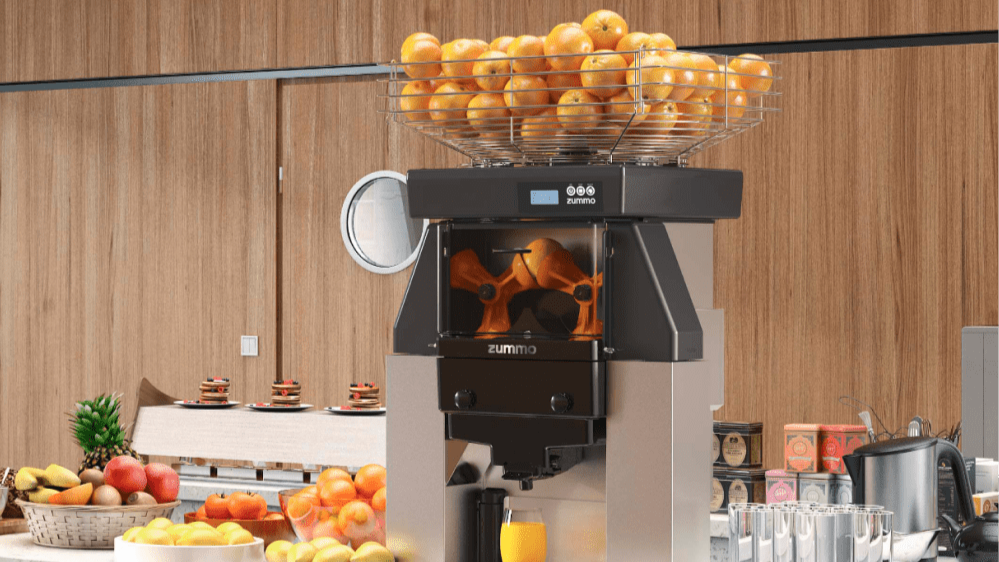
So hotels have a choice. They can talk about reducing single-use plastic. Or they can actually do it. The ones taking the second approach are switching to fresh juice machines.
The Corinthia provides a concrete example. When they installed fresh juice machines in their breakfast room, they eliminated approximately five thousand five hundred one-litre PET bottles per year. That is not a rounding error. That is a material reduction in waste. It is also something you can put in a sustainability report and mean it.
But the Corinthia is not unique in caring about this. Hotels with serious sustainability commitments are all asking the same question: how do we remove single-use plastic from the breakfast experience?
The Red Carnation Group took the question one step further. Their sustainability charter does not just encourage fresh juice. It mandates it. The policy states clearly: all properties serve fresh-squeezed juice. No bottled alternatives. No exceptions. This is a constraint. It is also a clarity. It means that when F&B teams are planning breakfast, there is one right answer. Fresh juice. The decision is made at the policy level.
What this reveals is something important: hotels with serious sustainability commitments are moving away from bottled juice. They are not doing this grudgingly. They are doing it because it aligns with what they have promised their guests. A guest who reads a hotel’s sustainability policy expects that commitment to be real. When they sit down to breakfast and are served fresh juice, not something that arrived in a plastic bottle, they feel the difference. The hotel has not just eliminated plastic waste. It has created a moment that the guest will notice and remember.
The economics work too. Fresh juice machines eliminate the cost of bottles, labels, and storage. They reduce supply chain complexity. A hotel ordering fresh fruit daily is not managing inventory of thousands of bottles. The operating cost per litre is competitive with the alternative. And the guest experience is materially better.
This is why luxury hotels are making this choice. It is not complicated. Bottled juice sits on the shelf, comes in plastic, and feels like a commodity. Fresh juice is made to order, requires no packaging, and tastes like something your hotel cares about. One aligns with a sustainability policy. The other one does not.
Hotels that have already made the switch are not going back. The ones still on the fence are learning from them. The bottled juice category is becoming harder to justify in a property that has published a serious sustainability commitment. It is not rocket science. It is just good hotel management.