Get in touch today

Why Fresh Juice Matters At The Royal Garden Hotel

There are certain things that define a luxury hotel breakfast. The quality of the eggs. The bread. The coffee. But according to John Serhal, Executive Chef at the Royal Garden Hotel in Kensington, there is something else that belongs in that conversation. Something that often gets overlooked until it goes wrong.

Fresh juice.

We visited John recently to find out what freshly squeezed orange juice actually means to a five-star hotel, and what he told us stopped us in our tracks.

“Alongside the eggs, fresh juice is the most important thing we do downstairs and I think it is a point of difference for this hotel”.

That is not a marketing line. That is an executive chef with four years of five-star breakfast service behind him telling us where fresh juice sits in the hierarchy of a luxury hotel morning.

The difference between fresh and fresh

One of the most striking things John raised was something that anyone who has stayed in a hotel will recognise, even if they have never put words to it.

A lot of hotels advertise fresh juice. Not all of them mean the same thing by it.

Juice that has come out of a carton or a bottle is not fresh juice, regardless of what the menu says. Guests know the difference, even if they cannot always explain why. The colour is different. The taste is different. The experience is different.

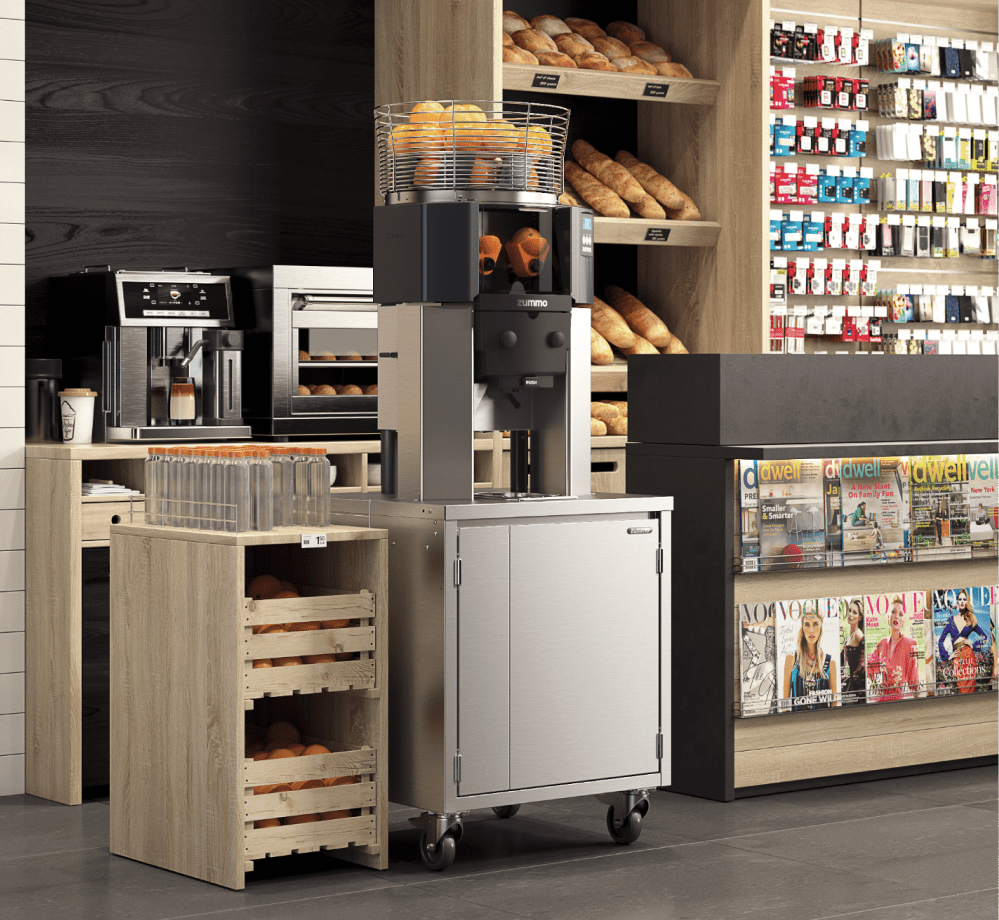
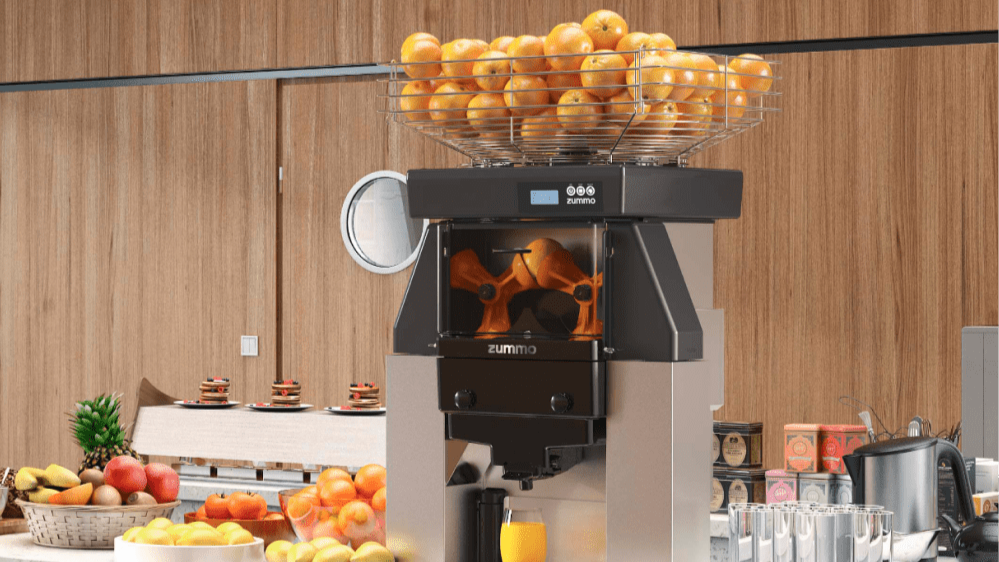
At the Royal Garden Hotel, there is a machine in the restaurant. Guests walk up to it, press a button, and watch their juice being pressed in front of them. That moment, juice going from orange to glass in real time, is something a bottle can never replicate.

It is also, John told us, one of the first decisions the hotel made when they reopened. They knew from the start that a juice machine in the restaurant was not a nice-to-have. It was essential.

The sustainability story hiding in plain sight

What surprised us most during our visit was the scale of the sustainability impact that comes from something as simple as pressing fresh oranges every morning.

Last year, the Royal Garden Hotel purchased enough fresh oranges to replace 7,000 litres of bottled juice. That is a quarter of a ton of single-use plastic that never went to landfill. Not offset. Not compensated for elsewhere. Simply never produced in the first place.

For the Royal Garden Hotel, this is a meaningful part of their commitment to achieving EarthCheck certification, one of the most respected sustainability benchmarks in the global hospitality industry. The kitchen sees fresh juice as their contribution to that goal, and it is a contribution that is measurable, visible, and understood by the whole team.

What this means for your hotel

Breakfast is the first real interaction most guests have with your food offering. It sets the tone for everything that follows. And in a five-star environment, guests arrive with expectations that have been shaped by every other five-star experience they have had.

Fresh juice done properly is one of the simplest ways to meet those expectations and exceed them. It is visible. It is immediate. And when it is pressed in front of a guest, it communicates something about your hotel’s values that no amount of marketing copy can replicate.

The good news is that getting it right does not have to be complicated. Zummo London has been working with some of London’s finest hotels, restaurants, bars, and private members clubs since 2001. We provide machines on a free-on-loan basis. You order your fruit by 8pm. Fresh fruit arrives before 5am the following morning. The rest takes care of itself.

Watch our film with John Serhal to hear it in his own words. And if you want to talk about what fresh juice could look like in your hotel, get in touch.
What Does EarthCheck Certification Mean for Your Hotel, and Where Does Fresh Juice Fit In?

If your hotel is serious about sustainability, EarthCheck is one of the most respected benchmarks in the industry. It is rigorous, independently audited, and recognised globally. But achieving certification is not a single action. It is the result of dozens of operational decisions, each one measurable and verified.

One of those decisions, what juice you serve at breakfast, might seem small. But in practice, the move from bottled juice to freshly squeezed removes a significant and measurable source of single-use plastic from your operation. And that matters when you are building a case for EarthCheck.

Here is an honest guide to what EarthCheck certification involves, and how the operational choices you make across your property, including in the kitchen, contribute to the process.

What is EarthCheck?

EarthCheck is a science-backed sustainability certification and benchmarking programmeme developed specifically for the travel and hospitality industry. With a presence in over 70 countries, it is the world’s leading sustainability certification for hotels, resorts, and tourism businesses.

Unlike a one-off audit, EarthCheck operates on a continuous improvement model. Properties must demonstrate measurable progress year after year to maintain and advance their certification level. Certification starts at Bronze and can progress through Silver, Gold, and Platinum over time, with each level representing sustained, verified performance.

The programme is aligned with the Global Sustainable Tourism Council (GSTC) criteria and recognised by international frameworks including the UN Sustainable Development Goals.

How Does the Certification Process Work?

The process has four broad stages. Each one builds on the last, and none of them can be shortcut.

  1. Commit to a sustainability policy

You start by establishing a formal Sustainability and Energy Efficiency Policy. This is not a statement of intent. It is a documented commitment backed by measurable action. EarthCheck works with you to develop this at the outset.

  1. Benchmark your performance

EarthCheck uses its online platform to track your performance in real time across a comprehensive set of indicators. These include energy use, water consumption, greenhouse gas emissions, waste output, and procurement practices. Your data is compared against baseline and best practice levels for your sector and geography. This is where you reach Bronze Benchmarked status.

  1. Implement a sustainability management system

EarthCheck provides criteria, templates, and guidance to help your teams build and operate a management system that tracks sustainability activity across the whole property. This is the operational backbone of your certification, and where what you measure becomes what you manage.

  1. Independent audit and certification

An independent auditor appointed by EarthCheck visits your property. They verify that your management system and operational data meet the certification requirements. If everything checks out, EarthCheck Certified status is awarded. To maintain it, you continue submitting data annually and demonstrating ongoing improvement.

What Does EarthCheck Actually Measure?

The benchmarking process covers a broad range of sustainability metrics, including:

  • Energy consumption and efficiency
  • Water use and conservation
  • Greenhouse gas emissions
  • Waste management and reduction
  • Procurement and supply chain practices
  • Ecosystem protection and biodiversity
  • Social responsibility and community impact

The approach is holistic. It is not enough to install solar panels and call it done. EarthCheck expects you to evidence performance across your whole operation, including food and beverage.

Where Freshly Squeezed Juice Comes In

This is where something as specific as your breakfast juice service becomes relevant to your certification journey.

Many London hotels still buy pre-packaged juice in PET plastic bottles. Each bottle used, chilled, poured, and disposed of represents a unit of single-use plastic waste, and over the course of a year in a busy hotel, that adds up to a significant and measurable figure.

Switching to freshly squeezed juice changes that entirely. Fresh fruit arrives each morning. It is squeezed on site. Nothing is pre-packaged in plastic. There is no bottle to dispose of.

We hear from chefs regularly that eliminating bottled juice from the breakfast service gives them something concrete and quantifiable to include when documenting waste reduction for sustainability programmes like EarthCheck. It is a change that is easy to evidence, because the data is simply the number of bottles no longer purchased.

That data matters. EarthCheck’s benchmarking process asks you to document procurement practices and waste output. If your hotel has moved away from single-use plastic juice bottles, that is a change you can point to directly.

There is also something worth noting that sits beyond the certification paperwork: the quality of what goes in the glass. Freshly squeezed juice tastes noticeably different from pasteurised, packaged alternatives. For a five-star property, that difference is part of the guest experience, and it sits comfortably alongside the environmental decision, rather than against it.

What London Hotels Are Already Doing

The move away from single-use plastic in food and beverage is already underway across London’s luxury hotel sector. Several long-standing Zummo London clients have made the elimination of bottled juice a formal part of their sustainability practice. Not because they were advised to, but because it aligned with commitments they had already made independently.

One group has made fresh juice mandatory across all their properties. Another has documented the removal of thousands of PET bottles annually as a direct result of switching to freshly squeezed. These are the kinds of figures that carry weight in a certification application: specific, auditable, and sustained year on year.

A Practical Starting Point

If you are beginning to think seriously about EarthCheck, the first step is reaching out to EarthCheck directly at earthcheck.org. The process begins with a scoping conversation, and their team will help you understand where your property currently stands and what a realistic path to certification looks like.

In parallel, it is worth taking stock of the operational decisions across your property that generate measurable impact. Your energy supplier. Your laundry practices. Your waste contracts. And yes, what arrives in your kitchen each morning and what packaging it comes in.

None of these decisions exist in isolation. Collectively, they form the operational picture that EarthCheck auditors will review. The more of them you can evidence, the stronger your application becomes.

If you want to understand more about how freshly squeezed juice fits into a sustainable food and beverage operation, or simply want to know what removing bottled juice from your service looks like in practice, we are happy to talk.

Mark Riley has been working with London’s best hotels since 2001. Get in touch to find out how the switch works in practice.

Five Luxury Hotels Opening in London 2026 and What They Mean for the UK Market

London’s luxury hotel landscape is shifting. Five major properties opening in 2026 are redefining what premium hospitality looks like. Here is what each opening means for the city and what they are asking from their partners.

Six Senses London (April 2026)

Six Senses has built its reputation on hyper-local sustainability. London is no exception. The property is opening with a mission to embed sustainability into every guest interaction. That starts at breakfast. F&B partners need to understand that sourcing is not just about quality. It is about being able to explain to a guest where their orange juice came from this morning. This is a hotel that will ask about supply chain transparency. It is a hotel that will care about packaging, waste, and the story behind the food on the table.

Waldorf Astoria Admiralty Arch

This is a heritage reboot in one of London’s most iconic locations. The Waldorf Astoria brand is positioning this property as the pinnacle of luxury service. That means hospitality partners need to be at the top of their game. When a five-star property opens under the Waldorf Astoria name at Admiralty Arch, expectations are not just high. They are elevated. F&B service needs to be seamless. The quality needs to be unquestionable. This is a property that will not compromise on reliability or professionalism.

St. Regis London

St. Regis is known for elevating guest experience through curated detail. F&B is a core part of that positioning. A St. Regis hotel is expected to excel at breakfast service. That means fresh ingredients, thoughtful execution, and consistency. The brand does not settle for average on anything. Guests choose St. Regis because they trust the experience to be refined. Partners need to understand that trust is the currency here. Reliability, quality, and a deep understanding of what premium service looks like.

Cambridge House by Auberge

Auberge is emerging as a distinct voice in luxury hospitality. The brand prioritises curated experiences and meticulous attention to detail. Cambridge House by Auberge will follow that playbook. This is a property that cares deeply about how things are done. Nothing is incidental. Everything serves the guest experience. A partner working with a property like this needs to bring expertise, reliability, and a willingness to understand that the small things matter as much as the big ones.

The Rubens at Kensington Gardens (Red Carnation Group)

The Red Carnation Group has published one of London’s clearest sustainability policies. Fresh-squeezed juice is not optional. It is mandatory. The group’s commitment is to remove single-use plastic from all properties. That means any partner working with a Red Carnation hotel needs to understand that sustainability is not a nice-to-have. It is the foundation of how the property operates. This signals where the market is heading. Hotels are not just talking about sustainability anymore. They are building it into their operating model.

What This Wave Means

These five openings tell you something important about the future of London hospitality. Quality over quantity. Sustainability as table stakes, not a marketing angle. Guest experience as the real differentiator.

The hotels opening in 2026 are not building properties that compete on price. They are building properties that compete on experience and values. That changes what they ask from their partners. It is not about being cheap. It is about being excellent, reliable, and aligned with what the hotel stands for.

For F&B suppliers, this is where the market is moving. The properties with the highest standards are the ones that will define the market for the next five years. The hotels opening now are setting that standard.

How Luxury Hotels Are Meeting Sustainability Targets with Fresh Juice Machines

Every major luxury hotel in London has published a sustainability policy. Single-use plastic reduction is almost always on the list. The challenge is translating that commitment into action at the breakfast table.

It sounds simple. It is not. Most hotels serve juice in bottles. Those bottles are plastic. PET plastic. They sit on the table. The guest pours it into a glass. The bottle goes into recycling. By the end of the year, a four hundred-room hotel goes through thousands of them. It adds up. The numbers are large enough that hotels notice them in their sustainability reports.

The Choice for Hotels

So hotels have a choice. They can talk about reducing single-use plastic. Or they can actually do it. The ones taking the second approach are switching to fresh juice machines.

The Corinthia provides a concrete example. When they installed fresh juice machines in their breakfast room, they eliminated approximately five thousand five hundred one-litre PET bottles per year. That is not a rounding error. That is a material reduction in waste. It is also something you can put in a sustainability report and mean it.

But the Corinthia is not unique in caring about this. Hotels with serious sustainability commitments are all asking the same question: how do we remove single-use plastic from the breakfast experience?

The Red Carnation Group took the question one step further. Their sustainability charter does not just encourage fresh juice. It mandates it. The policy states clearly: all properties serve fresh-squeezed juice. No bottled alternatives. No exceptions. This is a constraint. It is also a clarity. It means that when F&B teams are planning breakfast, there is one right answer. Fresh juice. The decision is made at the policy level.

What this reveals is something important: hotels with serious sustainability commitments are moving away from bottled juice. They are not doing this grudgingly. They are doing it because it aligns with what they have promised their guests. A guest who reads a hotel’s sustainability policy expects that commitment to be real. When they sit down to breakfast and are served fresh juice, not something that arrived in a plastic bottle, they feel the difference. The hotel has not just eliminated plastic waste. It has created a moment that the guest will notice and remember.

The Economics of Freshly Squeezed Orange Juice

The economics work too. Fresh juice machines eliminate the cost of bottles, labels, and storage. They reduce supply chain complexity. A hotel ordering fresh fruit daily is not managing inventory of thousands of bottles. The operating cost per litre is competitive with the alternative. And the guest experience is materially better.

This is why luxury hotels are making this choice. It is not complicated. Bottled juice sits on the shelf, comes in plastic, and feels like a commodity. Fresh juice is made to order, requires no packaging, and tastes like something your hotel cares about. One aligns with a sustainability policy. The other one does not.

Hotels that have already made the switch are not going back. The ones still on the fence are learning from them. The bottled juice category is becoming harder to justify in a property that has published a serious sustainability commitment. It is not rocket science. It is just good hotel management.

The State of the Global Orange Market in 2026

The world’s orange crop is under pressure. For luxury hotels serving fresh juice at breakfast, that matters more than you might think.

Right now, in April 2026, Egypt’s Valencia oranges are in peak season. They are moving fast. They are in high demand. Premium hotels know it. They know because the fruit arrives in their kitchens, and they can taste the difference between what’s available now and what will be available in three months.

This is the insider knowledge that matters. It is not just about price or supply. It is about understanding what is happening in the market and planning accordingly. For hotels that serve fresh-squeezed juice, knowing where the best fruit comes from is not a nice-to-have. It is the difference between serving your guests something exceptional and serving them something ordinary.

The demand for Egyptian fruit is strong because it is good. The supply is limited because it comes from one region, in one season. This combination is driving prices upward. Hotels planning their breakfast service for the next six weeks are learning this now. They are also learning that the pressure will ease in late June, when the season shifts.

But there is another story happening below the surface. One that will reshape how hotels think about orange juice for years to come.

Citrus greening disease is a long-term threat to global orange production. It has already devastated crops in Florida and Brazil. It is spreading. The disease does not kill the tree immediately, but it reduces yield and makes the fruit unmarketable. Growers are losing orchards. New plantings take years to mature. The impact on supply is not sudden, but it is relentless.

This is why relationships with suppliers who understand the market matter. It is why buying fresh fruit from a trusted partner beats importing processed concentrate from a commodity supplier. When concentrate prices doubled in the past year (from roughly 75 pence to one pound fifty per litre), hotels that had locked in relationships with fresh fruit suppliers were insulated from the shock. Those relying on commodity juice felt it directly.

Take Tropicana. The company shut down production for six months last year. Concentrate prices spiked as a result. For hotels depending on imported blended juice in bottles, this was a supply problem with no easy solution. For hotels with relationships with fresh fruit suppliers, it was a non-event. Fresh juice is not subject to the same commodity dynamics. It is harvested and served. There is no middleman, no stockpile, no vulnerability to a factory shutdown on the other side of the world.

The hotel takeaway is straightforward. Relationships with reliable fresh fruit suppliers matter more than price. Direct sourcing is not a luxury choice. It is a hedge against volatility. It is a guarantee that the juice served to guests next week is made from fruit that arrived this morning, not concentrate that was shipped in a container six months ago.

The supply chain for orange juice is shifting. The old model – import concentrate, blend, bottle – is becoming riskier. The new model is direct relationships with growers and suppliers who know the market and can navigate the volatility. Hotels that understand this difference are already building those relationships. The ones that do not are about to learn why it matters.